
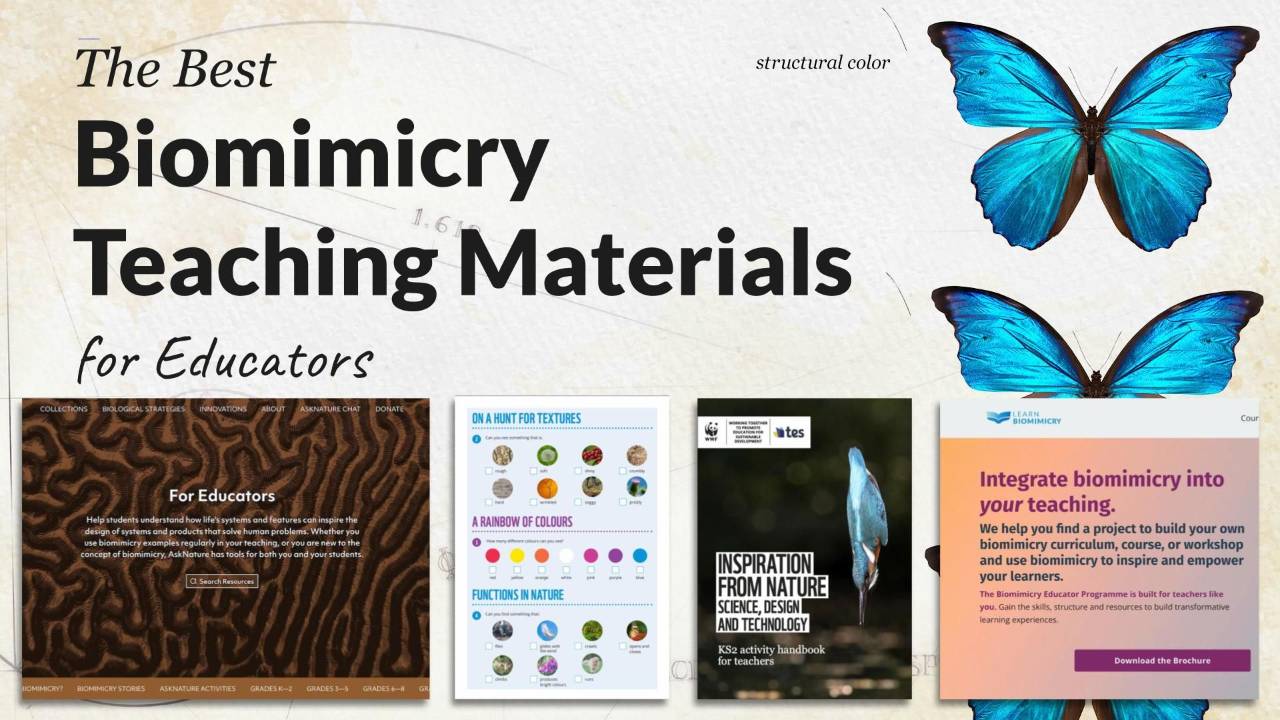
Ten of the Best Biomimicry Teaching Materials for Educators
As an educator, your time is incredibly precious.
You rarely have a moment to spare, and the time you dedicate to your craft is spent doing some of the most important work in the world.
You aren't just teaching the next generation of leaders, designers, and innovators - you are preparing them for jobs that might not even exist when they grow up.
So, how do we equip our students for an unpredictable future?
The answer might just be waiting outside your classroom window!
Biomimicry is an essential toolkit for preparing students to design life-friendly futures.
Futures that are resilient, regenerative, and beautifully aligned with nature, specific to your local bioregion.
Ready to bring biomimicry into your classroom?
We've compiled a list of excellent, time-saving resources designed specifically for educators like you:
Top Ten and readily available materials for Educators
Built for those interested in bringing biomimicry to your classroom:
1. AskNature for Educators
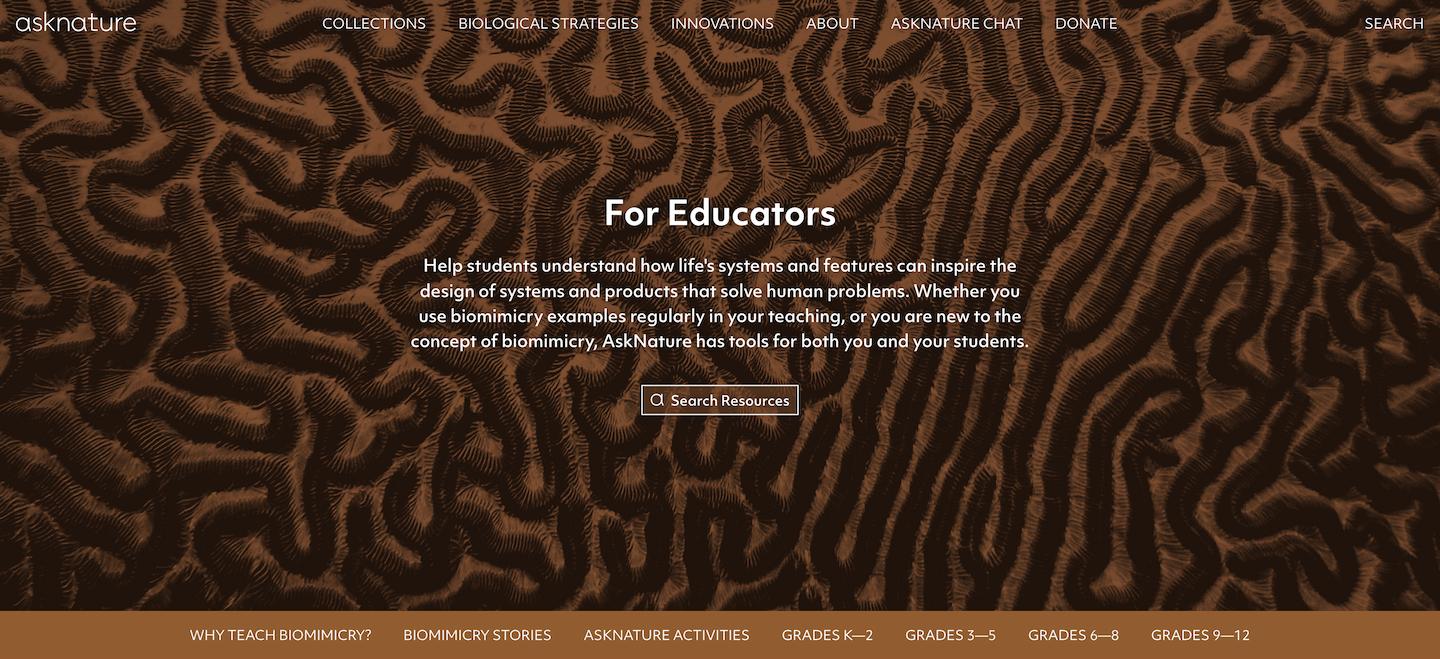
Created by the amazing AskNature team at the Biomimicry Institute, this is the ultimate starting point for primary and secondary teachers (ages 5–18). It is built for educators who want scientifically accurate, awe-inspiring biological strategies but don't have the time to build lessons from the ground up.
How to use it: Think of this as your "plug-and-play" biomimicry library. You can search for collections of activities, full lesson plans, and resource bundles organized specifically by pupil age and subject. Whether you need a quick 15-minute warmup activity about how butterfly wings inspire structural color or a full lesson on thermoregulation, you can download the materials and drop them straight into your teaching plan.
🔎 What: AskNature for Educators
📚 Level / Whose it for: Primary and secondary teachers working with students ages 5–18.
📍 Highlight / unique feature: It serves as a "plug-and-play" library offering searchable collections of biological strategies, full lesson plans, and resource bundles.
🎯 Website: AskNature for Educators
2. BioLearn
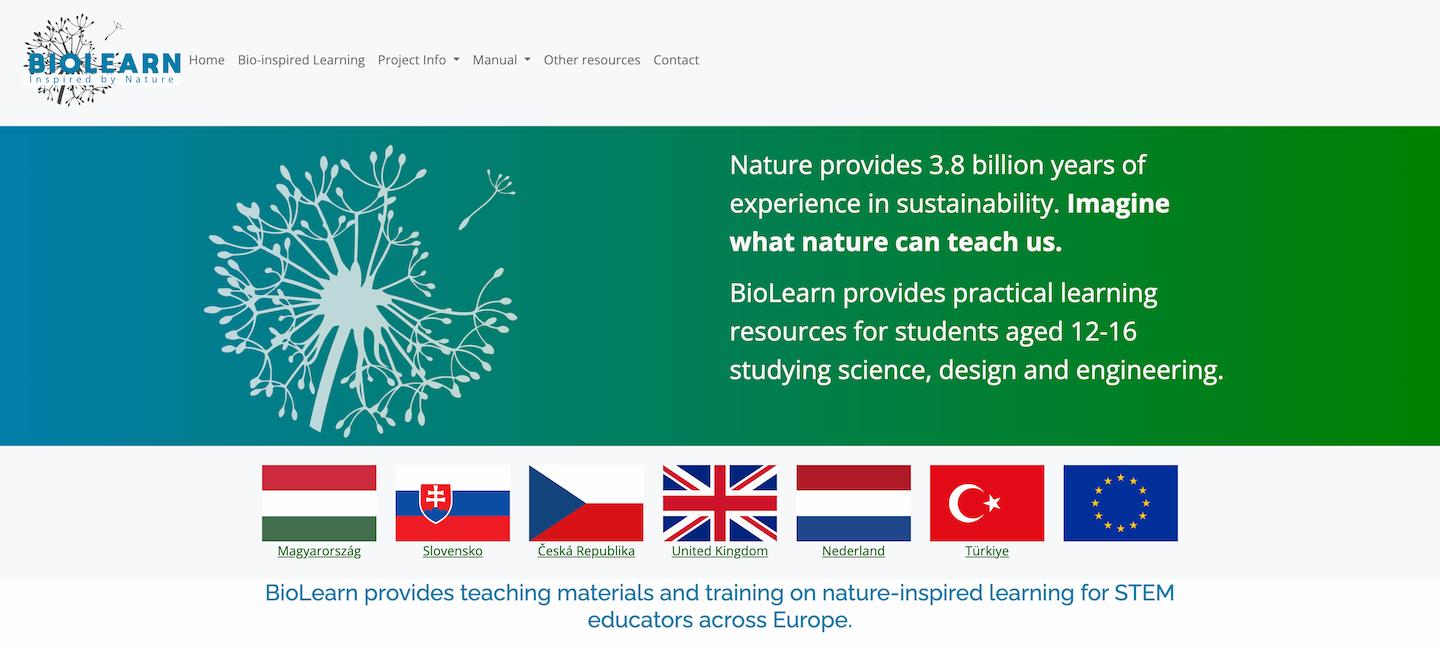
Funded by the European Commission, BioLearn is designed for primary and secondary school educators looking for a structured, systemic approach to seeding biomimicry in their schools. If you want to move beyond a single lesson and create a broader culture of nature-inspired learning, this is for you.
How to use it: BioLearn also provides plug-and-play lesson plans for primary and secondary school students, ranging from stories about different organisms with corresponding activities to learn from these biological models, to full lesson plans related to circular economy, packaging, buildings and water management.
BioLearn also provides frameworks and tips needed to deliver a highly engaging "Biomimicry Day" at your school. You can use their step-by-step guides to organize school-wide activities and download ready-to-use materials. Best of all, you can read through case studies and stories of other schools who have successfully run their own biomimicry days to get inspired and see what works best in practice. This site also has resources in Turkish, Slovenian, Hungarian, Czech and Dutch.
🌿 What: BioLearn
📚 Level / Whose it for: Primary and secondary school educators
📍 Highlight / unique feature: Provides structured materials for organising a "Biomimicry Day" at school and offers resources in multiple languages, including Turkish, Slovenian, Hungarian, Czech, and Dutch
🎯 Website:
3. EcoRise: Biomimicry and Science
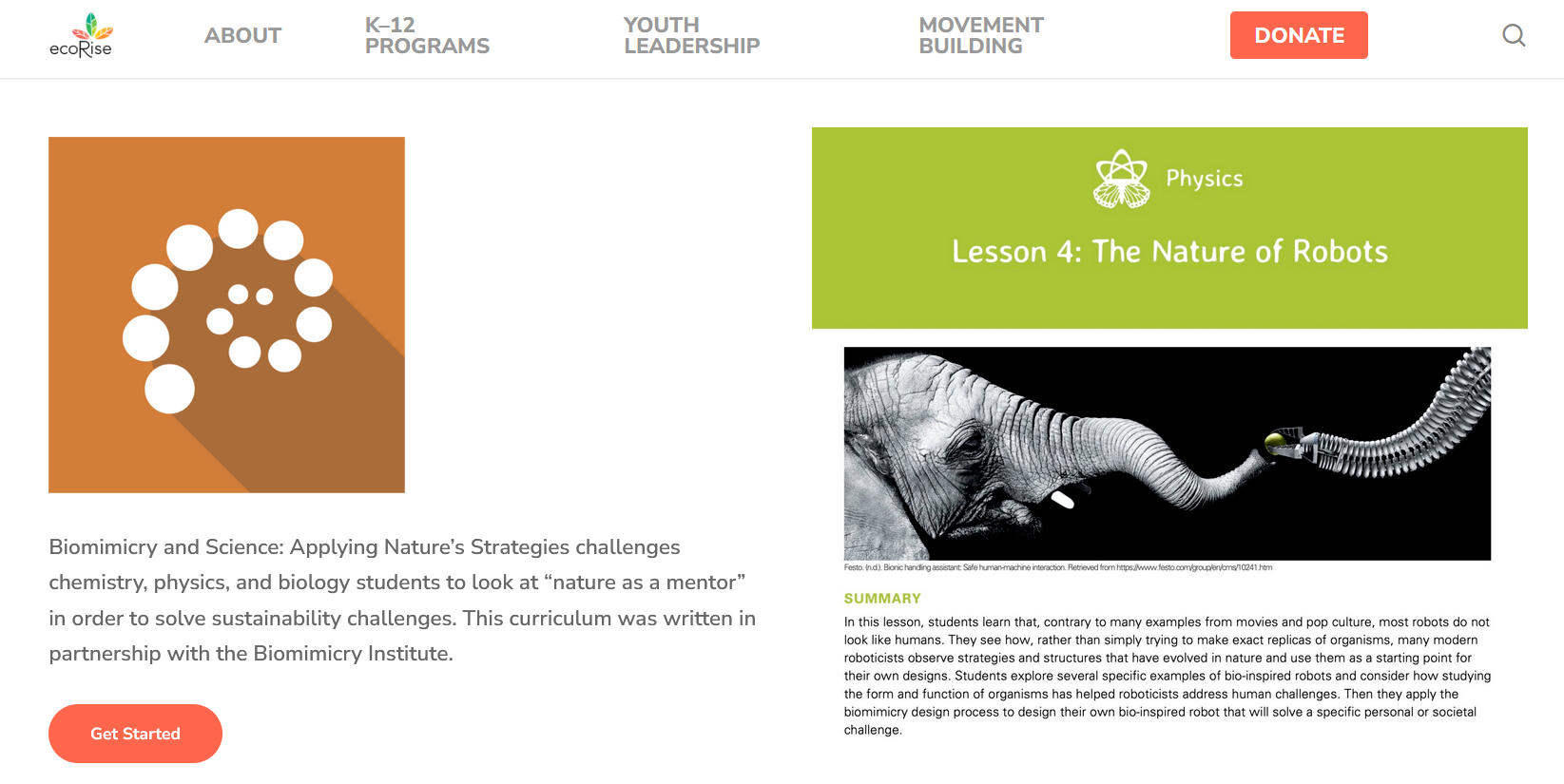
Created in partnership with the Biomimicry Institute, Biomimicry and Science is a phenomenal, comprehensive curriculum designed specifically for middle and high school science classrooms.
The Biomimicry and Science curriculum is perfect for educators wanting to seamlessly integrate sustainability and nature-inspired design into their core science requirements. Instead of treating biomimicry as an isolated topic, it uses fascinating natural phenomena as a "hook" to teach essential concepts in biology, chemistry, and physics, empowering students to see how nature's "technology" can be applied to solve real-world human challenges.
How to use it: As an educator, you can access 15 unique, hands-on lessons broken down by core science subjects (five each for chemistry, physics, and biology), plus a foundational introductory module. You might use their physics module on structural color to teach the properties of light, or the chemistry module on natural adhesives to teach intermolecular forces. The curriculum provides all the presentations, videos, and activity sheets you need, culminating in a design challenge where your learners can prototype their own sustainable solutions!
🌿 What: EcoRise
📚 Level / Whose it for: Middle and high school science students in grades 6–12.
📍 Highlight / unique feature: Specifically roots biomimicry in core science subjects, offering ready-to-use lessons explicitly tailored to meet standards in biology, chemistry, and physics classes.
🎯 Website: EcoRise Biomimicry and Science
4. Biomimicry Youth Design Challenge (BYDC)
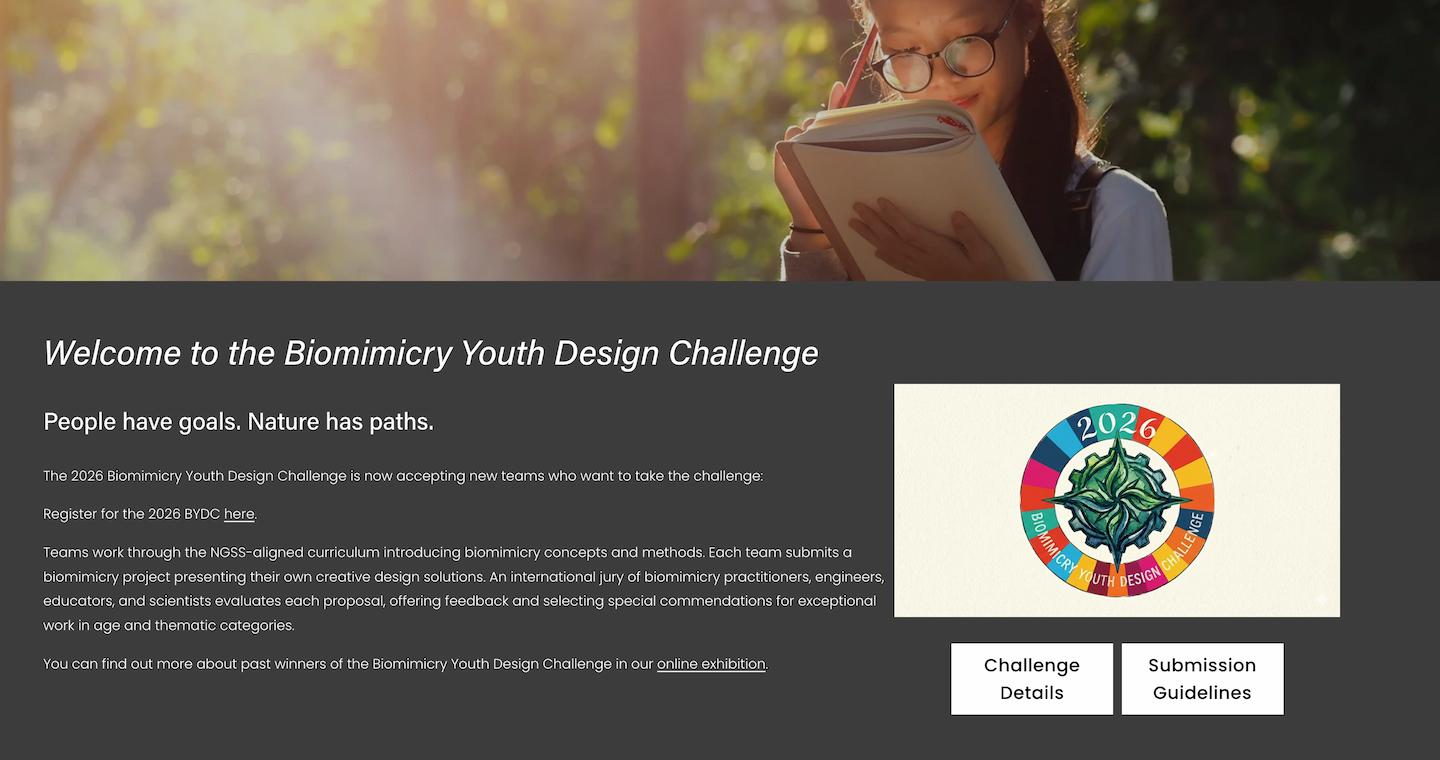
Currently hosted by the POCACITO Network, the BYDC is a phenomenal, free STEM learning experience tailored for middle and high school students (grades 6–12).
The Biomimicry Youth Design Challenge is perfect for educators wanting to facilitate project-based learning that meets Next Generation Science Standards (NGSS) while empowering students to solve real-world problems aligned with the UN Sustainable Development Goals.
How to use it: As an educator, you act as a "coach" using their free 22-lesson curriculum based on the MIMIC framework (Motivate, Investigate, Match, Innovate, Communicate). You can guide student teams through a design challenge where they create physical prototypes or systemic solutions inspired by nature. You can also use their online exhibition of past "Design Challenge Winners" to inspire your learners before they start brainstorming their own world-changing ideas!
🌿 What: Biomimicry Youth Design Challenge
📚 Level / Whose it for: Middle and high school students in grades 6–12.
📍 Highlight / unique feature: A project-based STEM experience using the "MIMIC" biomimicry framework (Motivate, Investigate, Match, Innovate, Communicate) to solve real-world problems.
🎯 Website: Biomimicry Youth Design Challenge
5. Biomimicry Short Course Set
Hey! That's us!
The Biomimicry Short Course Set serves as the foundational stepping stone for educators, who want to grasp the core of nature-inspired design through a structured, self-paced approach.
Originally developed with educators in mind, this set provides a clear roadmap through the often-complex world of biomimicry. It distills decades of practice into bite-sized, digestible modules that allow you to master the basic methodology before diving into more intensive, long-form programs.
This foundational course set is unique because it combines three essential pillars of the practice: the why, what and how of biomimicry, the Biomimicry Life's Principles, and the practical biomimicry design frameworks. The last course is a masterclass, looking at systems, design thinking and biomimicry.
For an educator, these courses provide the background knowledge and confidence needed to answer student questions and effectively facilitate the design challenges found in the toolkits mentioned above. It transforms the way you look at a forest or a tide pool, turning every walk in nature into a potential lesson plan.
🌿 What: Biomimicry Short Course Set (Introduction, Life's Principles, and Biology to Design)
📚 Level / Whose it for: Educators and those looking for a formal and self-paced foundational understanding of biomimicry
📍 Highlight / unique feature: The ease of a ted talk, the depth of a degree. This foundational set is the global leading biomimicry course today.
🎯 Website:
💸 Price: $198 USD.

Free eBook
A Field Guide to Biomimicry
10 years to build, 10 minutes to read. Gain the skills to apply biomimicry to your business, projects and daily life.
Get the free eBook →6. WWF Biomimicry Handbook & Activity Set
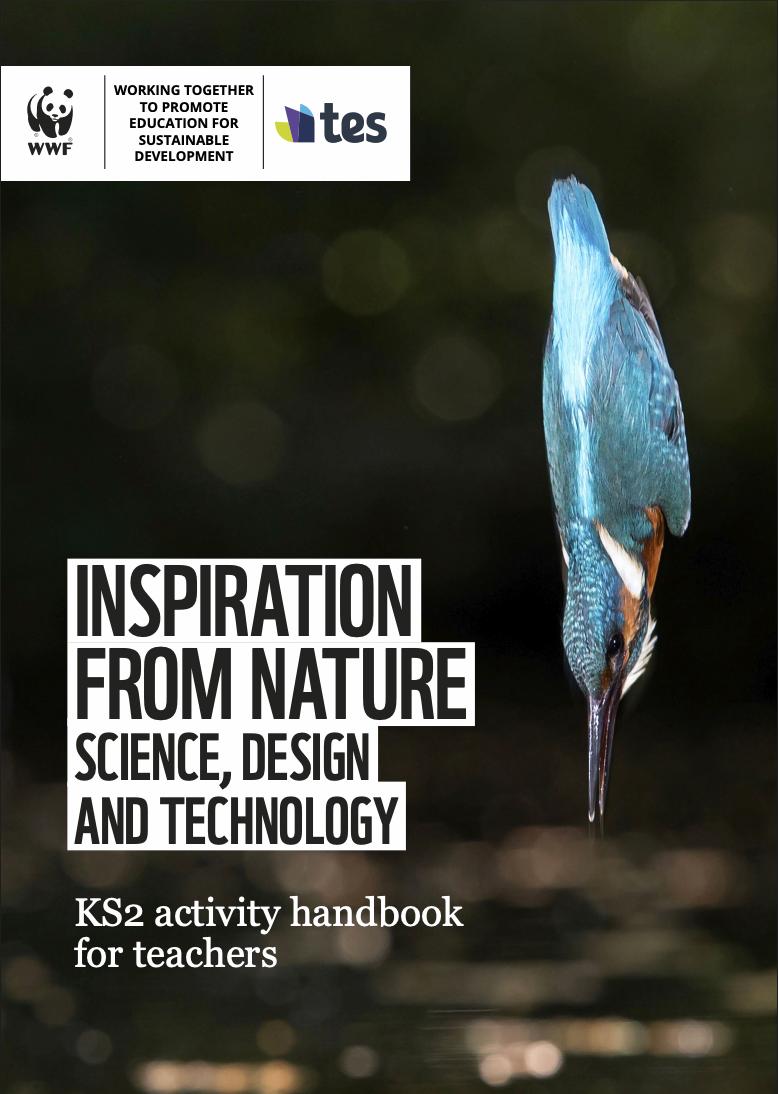
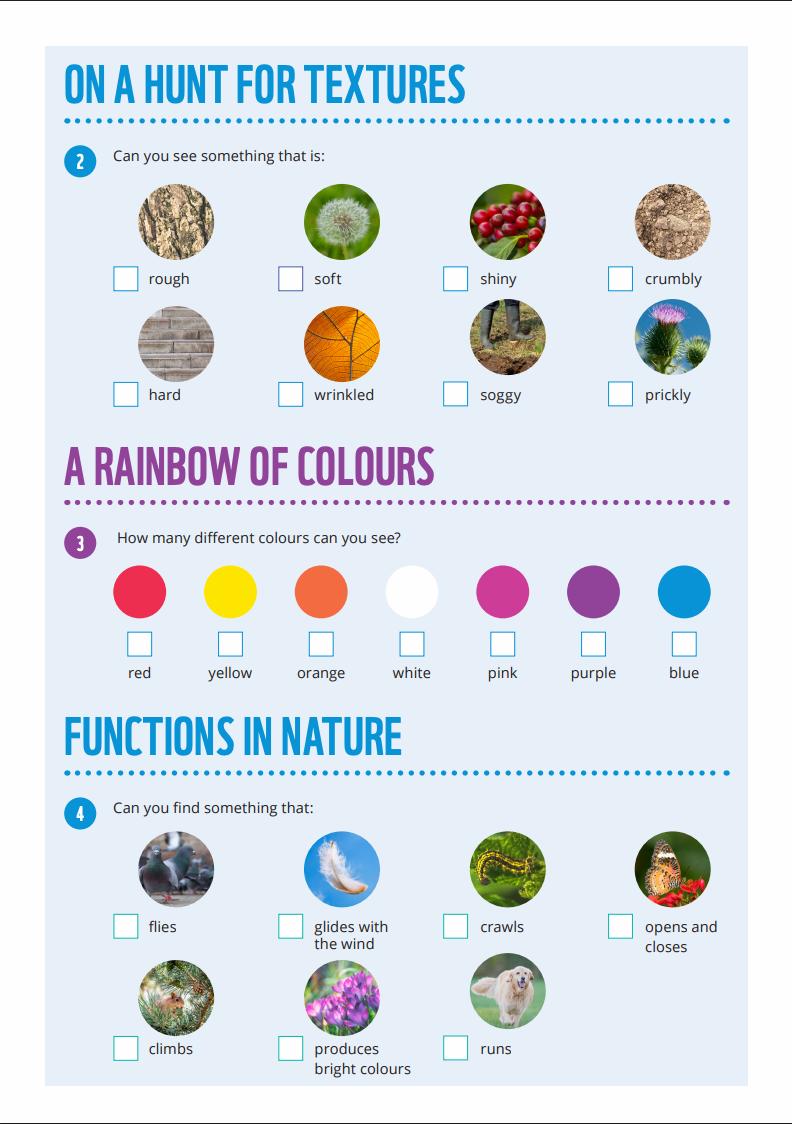
🐼 What: WWF Biomimicry Handbook & Activities (2019)
📚 Level / Whose it for: Primary and secondary school teachers (tailored for UK Key Stages 2, 3, and 4)
📍 Highlight / unique feature: This resource is split into two parts: a theoretical "Handbook" that explains the core principles of biomimicry and a "Activities" guide filled with hands-on classroom challenges. It features iconic case studies—like the Kingfisher-inspired Bullet Train and Sharkskin-inspired swimsuits—to help students bridge the gap between biology and engineering
🎯 Website: WWF Biomimicry Handbook / WWF Activities Guide
7. BioRobots: Designing Biomimetic Robots
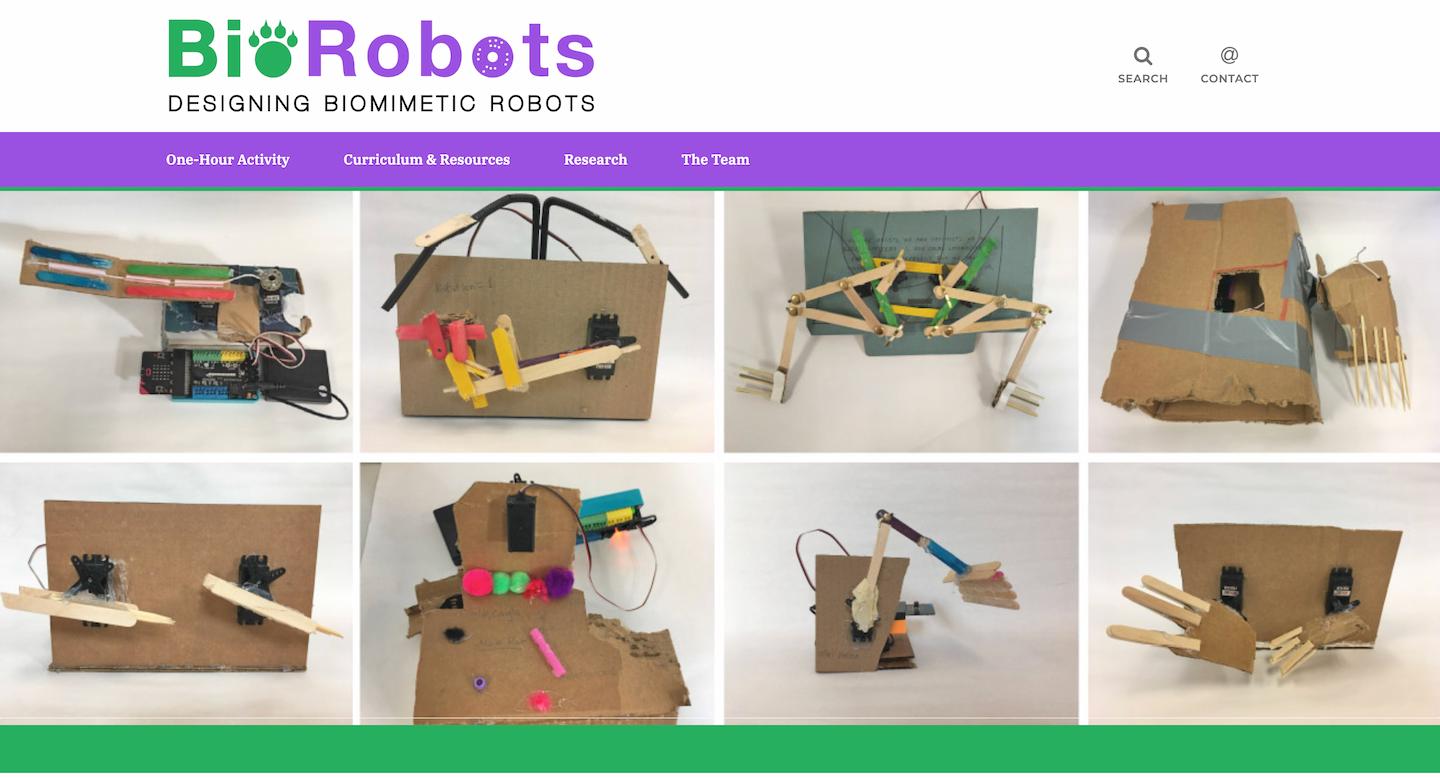
BioRobots is a highly specialized, 15-hour curriculum designed to turn your classroom into a high-tech engineering lab. It challenges students to step into the dual roles of biologist and engineer, using nature as a blueprint to solve complex human problems. The program is built around a compelling mission: designing a robot capable of navigating disaster zones for search-and-rescue operations.
Students dive deep into the mechanical advantages of digging animals - studying how the chisel-teeth of a mole rat or the hook-and-pull claws of a pangolin can be translated into robotic movements. Using the Hummingbird Robotics Kit, students build and program their own prototypes, fostering a sophisticated understanding of "computational thinking" while staying grounded in biological reality.
> if you're curious to understand the difference between biomimicry and biomimetics: read What (really) is Biomimicry.
🌿 What: BioRobots: Designing Biomimetic Robots
📚 Level / Whose it for: Middle school students (Grades 6–8) and STEM educators.
📍 Highlight / unique feature: A mission-driven curriculum focused on search-and-rescue robotics, combining intensive biological research with hands-on coding and mechanical engineering.
🎯 Website: TERC BioRobots
💸 Funder: Funded by the National Science Foundation
8. Making Inspired by Nature
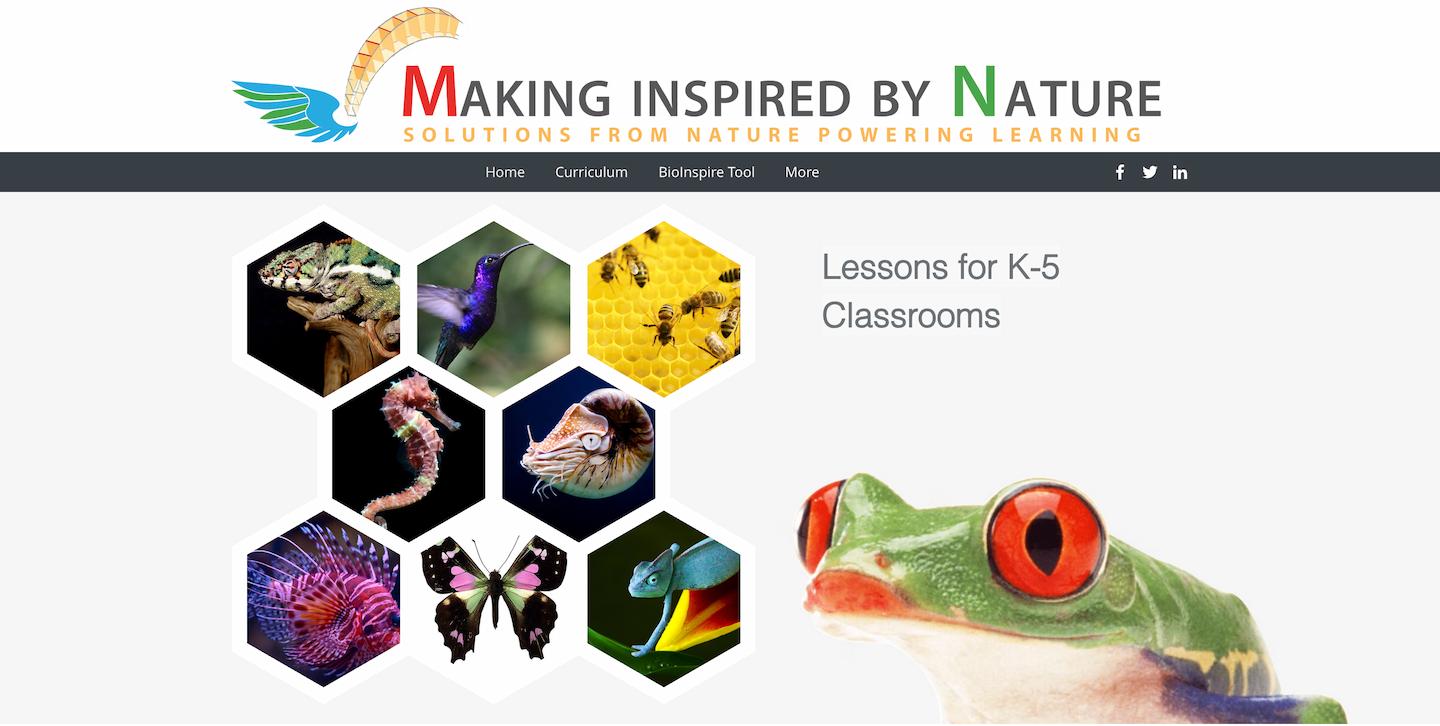
Making Inspired by Nature provides a broader framework for educators looking to bridge the gap between "Maker" culture and the natural world. This resource offers a comprehensive roadmap for integrating biomimicry into design-build projects, emphasizing that nature is the ultimate mentor for sustainable innovation. It moves beyond simple observation, encouraging students to physically prototype solutions that mirror the efficiency of living systems.
The platform serves as a hub for the "Designing Biomimetic Robots" project and other bio-inspired making activities. It is particularly effective for teachers who want to move their students from "learning about" nature to "creating with" nature's principles. By focusing on the intersection of biology and making, it empowers students to see themselves as innovators who can contribute to a more regenerative future.
🌿 What: Making Inspired by Nature
📚 Level / Whose it for: Middle school educators and STEM coordinators
📍 Highlight / unique feature: Focuses specifically on the "Making" aspect of biomimicry, providing a clear pedagogical bridge between biological inquiry and physical prototyping in maker-spaces.
🎯 Website: Making Inspired by Nature
9. Natural Entrepreneurs
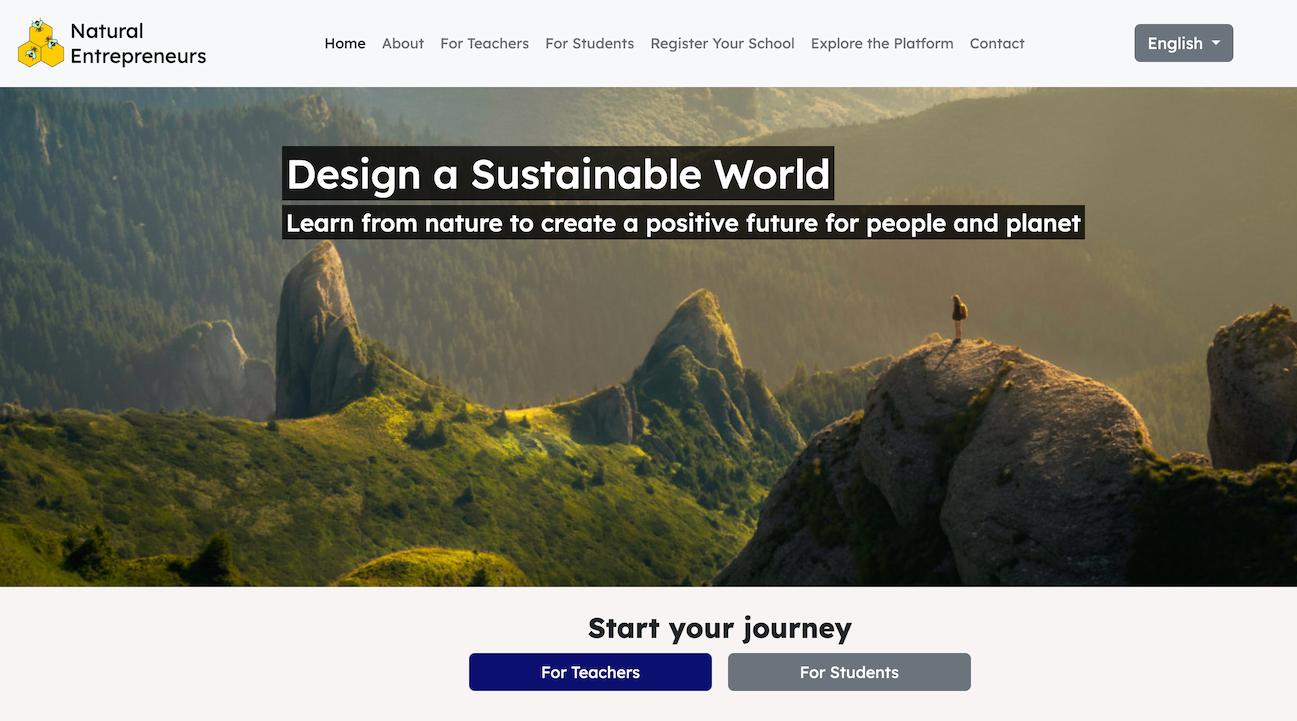
This EU-funded Erasmus+ program is aimed at students aged 14 - 18 and is ideal for teachers working at the intersection of STEM, design, and business.
It encourages students to apply nature's lessons to entrepreneurial thinking, showing them that sustainability and green economies are viable, exciting career paths.
How to use it: Natural Entrepreneurs offers a brilliant interactive online platform. Students can work through a self-paced program, with the possibility to collaborate in teams, to turn their nature-inspired ideas into real business plans. Meanwhile, the dedicated teachers' platform allows you to track progress, access cross-disciplinary teaching resources, and support your students as they accrue "collaboration points" for sharing ideas in the design process.
🌿 What: Natural Entrepreneurs
📚 Level / Whose it for: Students aged 14–18 and teachers interested in the intersection of STEM, design, and business
📍 Highlight / unique feature: Features an interactive online platform where students turn nature-inspired ideas into business plans and earn "collaboration points"
🎯 Website:
10. Learn Biomimicry Educator Programme
We've saved the best for last.
Okay, so this one isn't very readily available... nor is it a resource per se... but it's the best way to bring biomimicry to your learners.
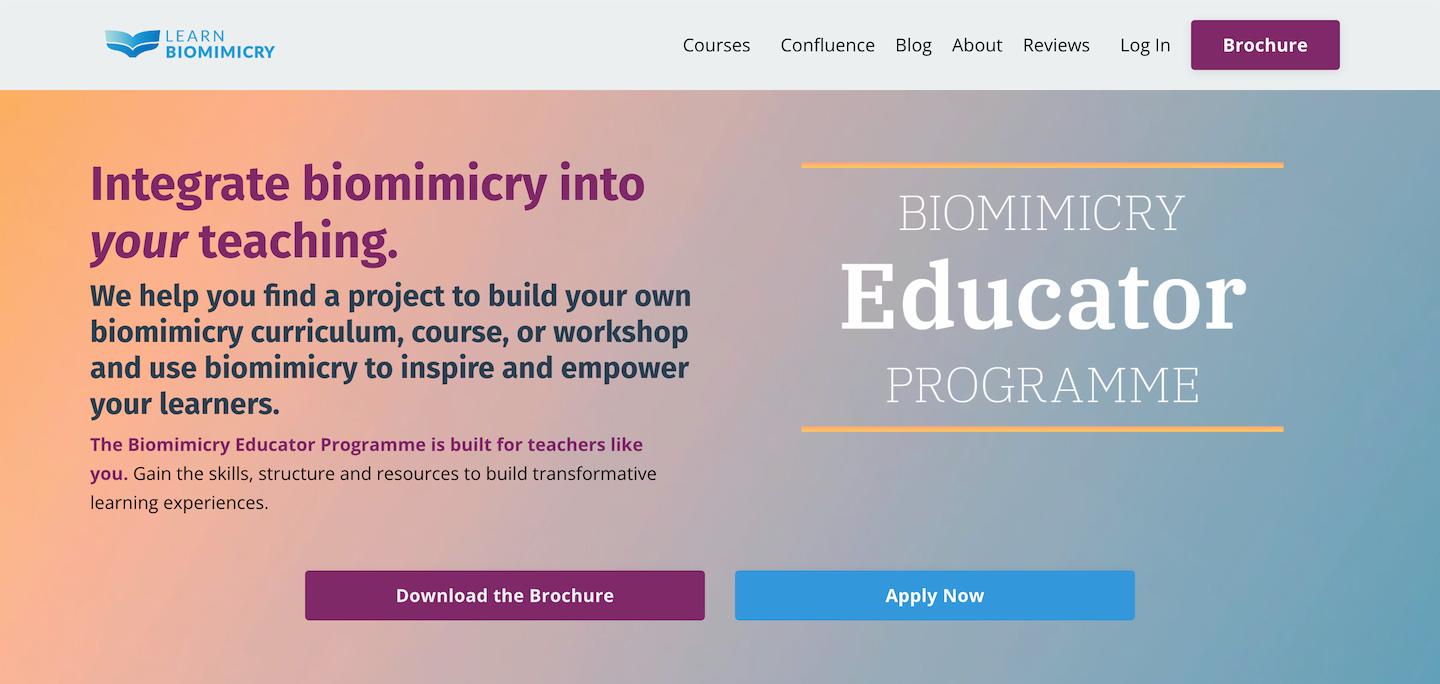
This is the flagship programme for the highly motivated educator, facilitator, or leader who wants to integrate biomimicry into their teachings.
If you believe that changing the world starts with changing minds, and you want biomimicry to be your primary tool for achieving this, this program is designed for you.
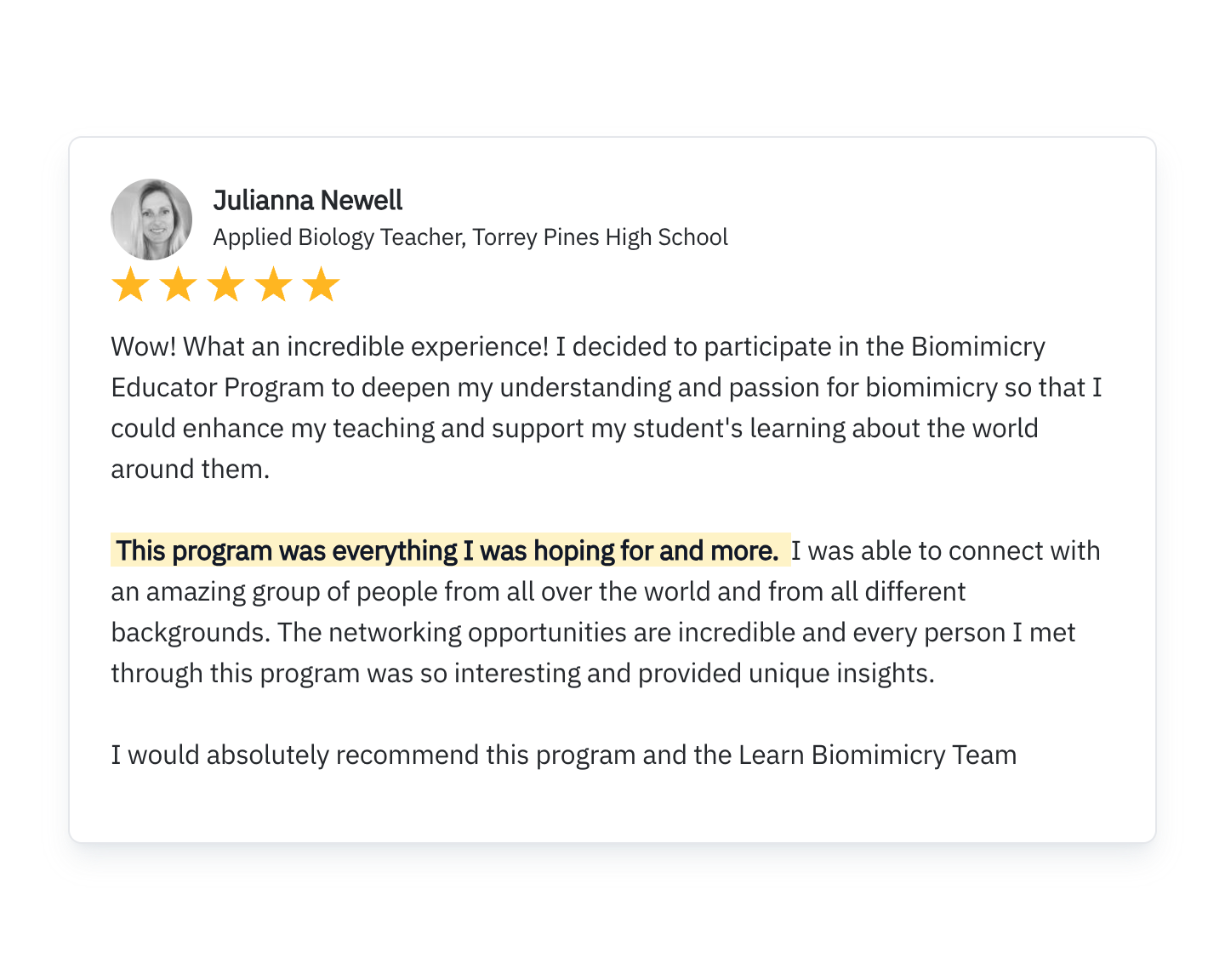
How it works: This is an immersive, 6-month (part-time) projected-based programme, built for educators. Rather than just giving you a curriculum, it helps you deeply understand the biomimicry methodology and tailor your teaching, lectures, curriculum, course or workshop exactly to your specific audience and local bioregion. You are mentored by two incredible biomimics and learn alongside a group of incredible, inspiring individuals. This is more than a programme, it's an unforgettable learning journey (with a 4.9 Net Promoter Score rating and great reviews!).
🌿 What: Learn Biomimicry Educator Programme
📚 Level / Whose it for: Highly motivated educators, lecturers, facilitators, and teachers
📍 Highlight / unique features: Personalised and project-based structure, peer to peer learning and mentorship. Cohorts are limited to 12 persons, and overlaps with the Biomimicry Practitioner Programme.
🎯 Website: Learn Biomimicry Educator Programme🏅 Certificate: Yes, Learn Biomimicry Educator
💸 Price: $2,990 USD
In Summary
Biomimicry Educators are the critical lever that enables nature-inspired innovation. Not all heroes wear capes, some teach biomimicry : )
Really though, bringing nature's genius into your classroom matters.
Why bringing nature's genius into your classroom matters:
- It teaches tangible sustainability
Sustainability can sometimes feel like an abstract concept, but biomimicry makes it real.
Nature is our best model for sustainability. By studying how ecosystems function, we provide students with tangible blueprints for solving problems in ways that go beyond traditional "sustainability" (doing less harm) to regenerativity (do more good) to actively creating conditions conducive to life.
- It drives social equity and inclusivity in STEM, especially for girls
Teaching biomimicry breaks down the traditional silos between biology and engineering.
It encourages more female students to pursue STEM (science, technology, engineering, and mathematics) fields, because we present these subjects not just as calculations, coding or building, but as a way to protect and create better social and environmental conditions for our local communities.
- It cultivates hope and empowerment
The future can feel deeply uncertain right now. As environmental and social challenges grow, eco-anxiety is becoming a real burden on our youth.
Biomimicry acts as an antidote to this despair because it provides a solid, optimistic standard for where humanity should be heading. By reconnecting children and adults with the outdoors, while approaching nature as a model, measure and mentor, we can shift the narrative for future generations.
To all the educators out there: thank you for your dedication to the future. By teaching your students to look to nature for answers, you are planting the seeds for a resilient, regenerative world.
Stay curious,
Yuma Langenbach, Biomimicry Practitioner
PS - whenever you're ready, there are 3 ways Learn Biomimicry can help you:
→ 1. The Biomimicry Short Course Set: Join 1,679+ learners, from 41+ countries and start your biomimicry journey today. This short course set was original built for educators, and will give you and your learners a solid understanding of the biomimicry basics.
→ 2. The Biomimicry Practitioner Programme: Accelerate your career and gain the skills you need to apply biomimicry to your career and daily life. This 6-month (part-time) mentored programme will enable you to practice biomimicry confidently.
→ 3. The Biomimicry Educator Programme: Build your own biomimicry curriculum, course or workshop series. Purpose-built for educators, this programme will empower you to successfully integrate biomimicry into your teaching environment.
Online Short Courses
Start your biomimicry journey
The depth of a degree, the ease of a TED talk. 10 years to build, 10 hours to complete.
Explore the short courses →
Here’s the one biomimicry course you need that turns these examples and insights into a skill set. Trusted by 1,679+ Learners. Three self-paced courses, one price. $198 US.
10 years to build, 10 minutes to read. This eBook is the essence of biomimicry.
Recent Posts