
The Nature of Antifragile
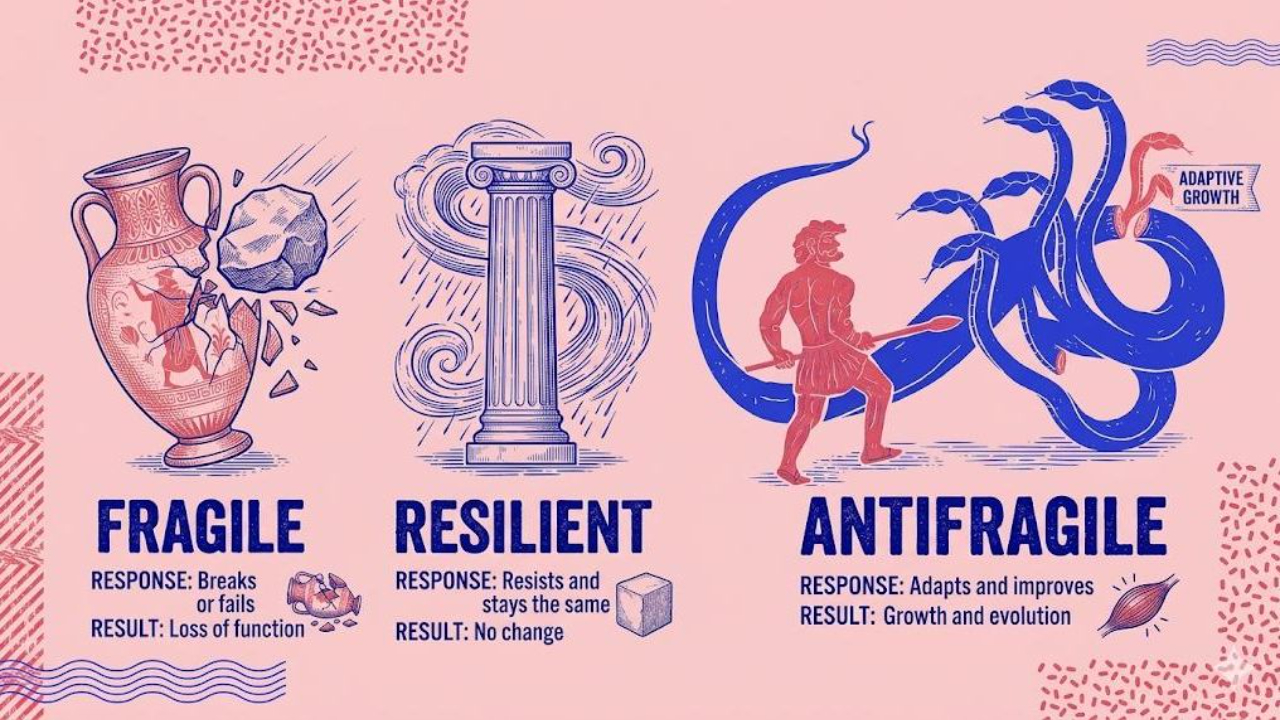
You are not fragile.
In fact, you're antifragile.
Inside of you, you have the recipes and strategies to not only withstand adversity, but to gain from it.
Today we’re focusing on antifragility, and how you can go beyond building resilience. It’s a newly discovered concept that has existed in nature for ions.
Here is what you can expect to learn
- What antifragile really is (and what it's not)
- How (and when) you or a business can gain from adversity, and
- Why your best ideas need a little friction.
Also, the fantastical Biomimicry Extraordinar Jess Berliner has summarised all this into one epic presenastion... if you'd prefer to watch and not read, click on the video below.
The following video on Anti-fragile Learning presented by Jess Berliner was originally recorded in the Biomimicry Confluence, March 2026. Jess cofounded Learn Biomimicry and has led the development of all of their learning products & experiences, including Biomimicry Short Courses, Biomimicry Practitioner Prog., Biomimicry Educator Prog., handbooks, and more. Working closely with the Learn Biomimicry team, Jess has facilitated career-building biomimicry learning journeys for over 170+ working professionals all around the world.
The definition of Antifragile:
Antifragile is becoming more robust when exposed to stressors, uncertainty, or risk.
Antifragile is the opposite of fragile.
Have you ever noticed that your muscles get stronger when you slightly break or tear them?

In nature, some systems don't just withstand stress - they gain from it. Your bones, your immune system, your muscles, your brain all get stronger from adversity. Pressure and impact increases bone density, infection increase immune readiness, physical strain increases muscle strength and cognitive strain increases neural growth.
Here’s a few easy ways to understand what I mean by antifragile.
When you subject your bones to the adversarial pressure of impact - like walking or running - they don’t crumble; they increase in density.
When your immune system meets a virus, it doesn’t just survive; it increases its readiness for the next fight.
Your muscles break, tear, and strain under heavy loads, only to grow back stronger.
Even your brain follows this rule: cognitive load triggers neural growth.
In nature, systems don't just withstand stress - they gain from it. This isn't just "bouncing back." It’s something much more powerful.
Fragile is a box of champagne glasses, antifragile is things that gain from adversity.
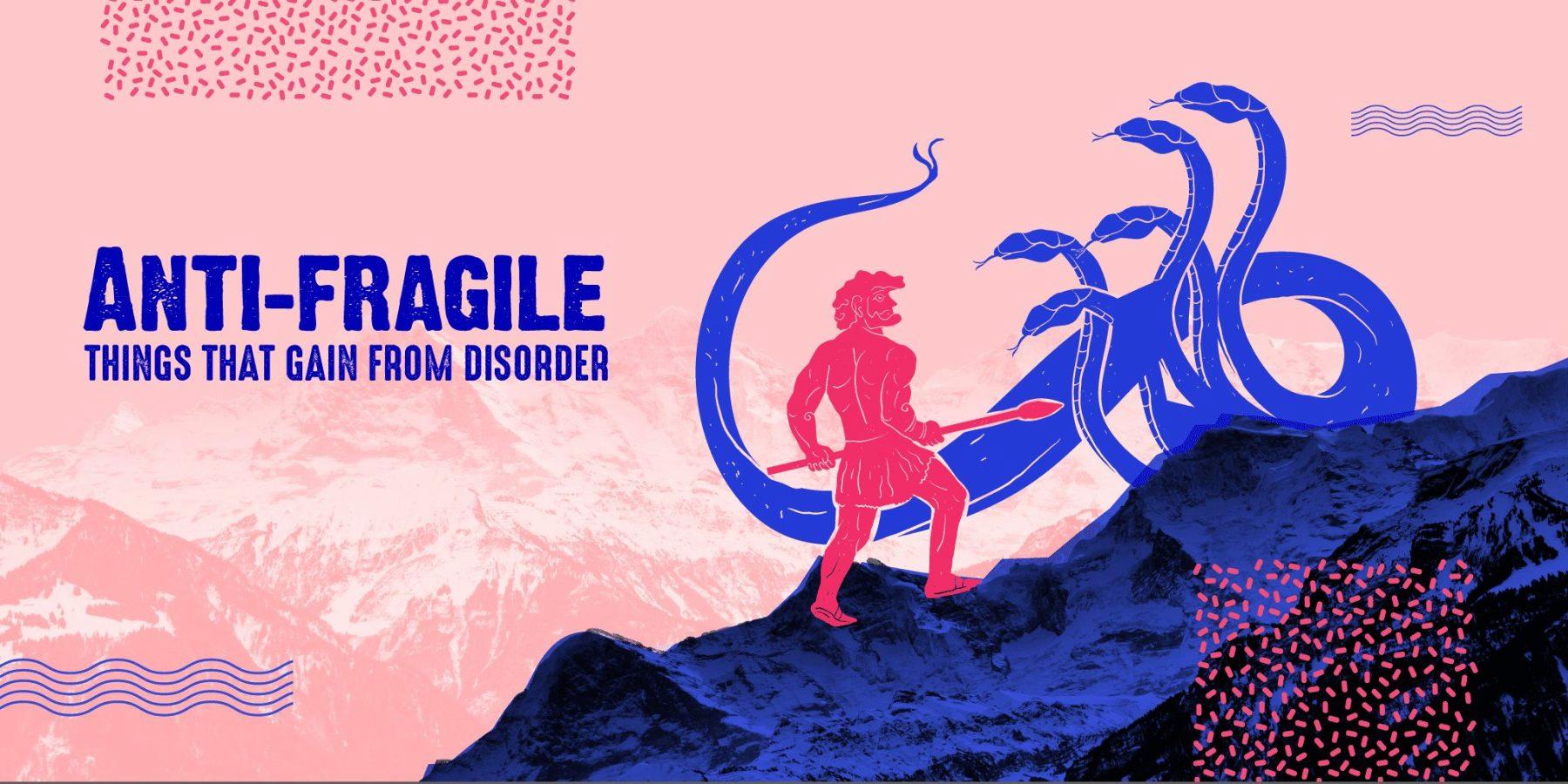
“Antifragility is beyond resilience or robustness. The resilient resists shocks and stays the same. the antifragile gets better” - Nassim nicolas Taleb. Image Reference: Charge bee Blog
The Antifragile Advantage
Nassim Nicholas Taleb famously coined the term Antifragile to describe this phenomenon.
While we have words for things that break under pressure (fragile) and things that stay the same (resilient), we have lacked a word for things that actually get better when exposed to volatility, randomness, and disorder.
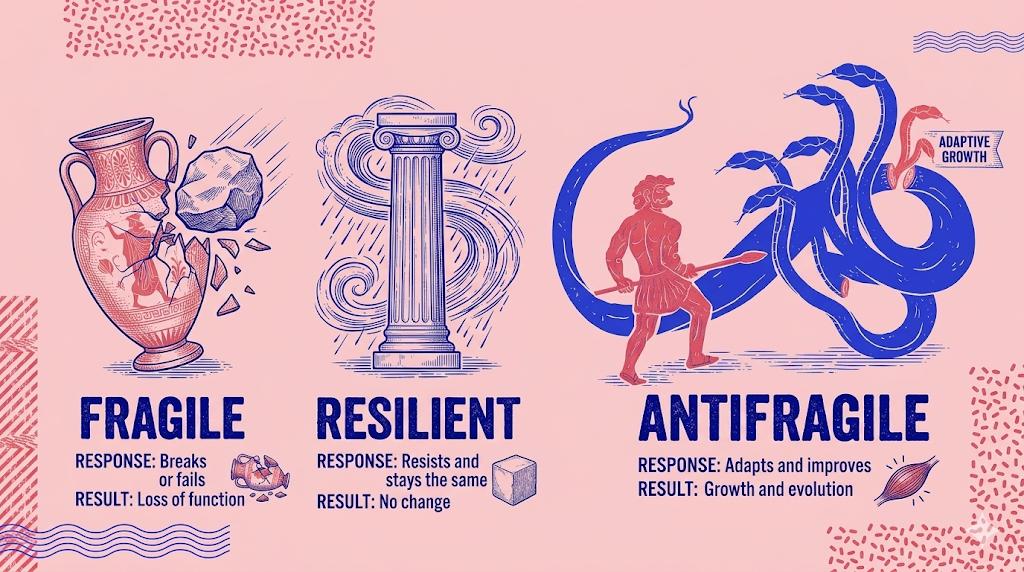
|
Property |
Response to Stress |
Result |
|
Fragile |
Breaks or fails |
Loss of function |
|
Resilient |
Resists and stays the same |
No change |
|
Antifragile |
Adapts and improves |
Growth and evolution |
Nature is the ultimate practitioner of the "infinite game."
It turns adversity into advantage, challenges into opportunities, and small losses now into big-picture wins later.
Why We Avoid the Very Thing That Makes Us Stronger
In the world of business and design, we tend to do the exact opposite of nature. We strive for "neat" solutions. We lean on heuristics, biases, and shortcuts to make decision-making easier.
We use AI to automate the "friction" out of our processes.
But here is the catch: Solutions devoid of friction rarely survive reality.
When an untested, "perfect" idea hits the messy, volatile real world, it tends to shatter. It was never stress-tested; it never looked outside its own bubble.
Three Antifragile Examples (Nature, Business and Design)
Here are the three examples focusing on the core concept of Antifragility.
1. Antifragile in Nature: The Wind and the Wood
The Concept: Trees require the "stress" of wind to develop structural integrity. Without it, they grow tall but lack the internal strength to support their own weight.
-
Fragile: In the Biosphere 2 experiment, trees grown inside a massive, windless greenhouse grew rapidly but eventually collapsed. Because they were shielded from the wind, they never developed stress wood—the dense, flexible tissue that allows a tree to stand firm.
-
Antifragile: By exposing trees to wind (adversity), you trigger thigmomorphogenesis. The tree "learns" from the stress, thickening its trunk and deepening its roots. In this way, the tree doesn't just survive the wind; it uses the wind to become stronger.
Reference Biosphere 2: Biosphere 2: During the project, researchers observed that many trees grew rapidly in a large greenhouse / closed ecosystem but collapsed under their own weight. Because there was no wind inside the dome, the trees failed to develop the "stress wood" necessary to support their height, effectively proving that a lack of environmental stress leads to physical fragility.

Free eBook
A Field Guide to Biomimicry
10 years to build, 10 minutes to read. Gain the skills to apply biomimicry to your business, projects and daily life.
Get the free eBook →2. Antifragile Business: The "Ship Early, Ship Often" Strategy
The Concept: Longevity in business isn't found in perfect planning, but in constant, small-scale exposure to the market.
-
Fragile: Spending years developing a product in a vacuum is fragile. Without real-world feedback, the slightest mismatch between your design and the customer’s actual needs can cause the entire venture to fail upon launch.
-
Antifragile: Shipping early and often—the "Minimum Viable Product" (MVP) approach—is antifragile. Every bug found and every piece of negative feedback is a "stressor" that allows you to adapt and improve. You don't just fix the product; you evolve it to be more successful than a "perfect" plan ever could have predicted.
3. Antifragile Design: Living Infrastructure
The Concept: Traditional port and coastal engineers typically seek to resist or fight nature, but antifragile design partners with it so the harbour structures improves over time.
-
Fragile/Robust: Historically, harbors were built as rigid concrete barriers. While "robust," these structures are actually fragile over long timelines; the constant pounding of waves eventually cracks the concrete, requiring expensive and constant repairs to prevent collapse.
-
Antifragile: Modern "living" harbors invite nature in by encouraging coral and oyster reef growth on the structure. As these biological organisms grow and calcify, they create a self-healing barrier that becomes denser and more shock-absorbent as time passes. Instead of the ocean destroying the harbor, the ocean’s own life forms make the harbor stronger.
Learning from the Master of Antifragility
Nature has been "ideating" on how to solve for function for billions of years.

Take the humble seed pod. Every species has the same goal - protect and distribute genetic information - yet the solutions are wildly different based on context. Nature doesn't avoid the "adversary" (wind, fire, animals); it integrates the unexpected.
According to the Biomimicry Life's Principles, we call this "Integrating the Unexpected" and "Reshuffling Information." It’s not just about replicating what works; it’s about incorporating mistakes and randomness to create new forms and functions.

Following the principles of antifragility—where systems improve through stress and disorder—here is a clear, concise rewrite of those sections.
How to Practice Antifragility in Your Work
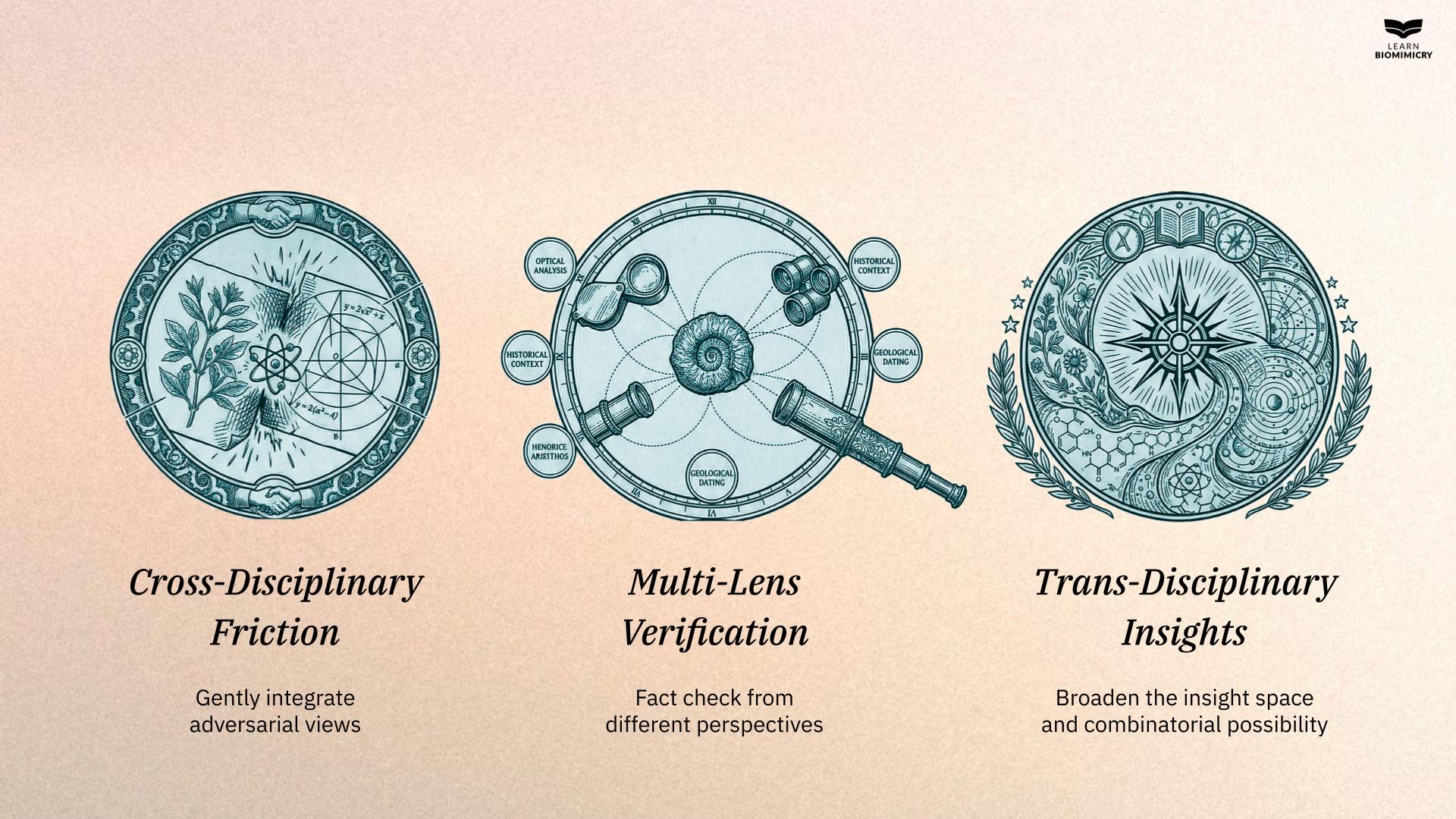
-
Apply Cross-Disciplinary Friction: Avoid echo chambers by seeking "otherness." Engaging with people who disagree with you provides the necessary stress to strengthen your ideas.
-
Multi-Lens Verification: Don't rely on a single perspective. Stress-test your concepts through the different "lenses" of a scientist, a designer, and an end-user.
-
Empathy Interviews ("Strong Medicine"): Real-world feedback can be uncomfortable, but seeking the friction of a user's actual experience transforms a narrow "keyhole view" into a robust, multi-dimensional solution.
- BONUS: Study Nature's Antifragile Design: Study and learn from nature, specifically where to gains from disorder. Seek nature-inspired ideas to go beyond recilience or robust designs.
Gaining from Adversity
Antifragility is the internal strategy for not just surviving a challenge, but using it to grow.
The Biological Rule: Just as physical impact increases bone density and viral exposure readies the immune system, professional adversity provides the "load" required for growth.
Organisational Example: A team that experiences a project failure and uses the "post-mortem" to redesign their entire workflow is antifragile; they are now better equipped than if they had never failed at all.
Why Your Best Ideas Need Friction
Solutions devoid of friction rarely survive the messy, volatile real world.
The Necessity of Resistance: Without the "adversary" of external critique or technical constraints, ideas remain fragile "perfect" bubbles that shatter upon launch.
Behavioral Example: A Neo Bank discovered that a seamless, 5-minute onboarding led to high customer churn. By intentionally adding "friction" (a 15–30 minute process), they increased customer commitment and long-term retention
FAQs
Q: When should you avoid antifragility?
Antifragility fails when the stressor is catastrophic rather than incremental.
If the "shock" is so large that it destroys the system before it can adapt (e.g., a tree in a hurricane vs. a breeze), the system remains fragile. Use antifragility for growth, but maintain "robust" boundaries to prevent total failure.
In summary: A Call for Curiosity
Shifting from "I know" to "I wonder" is a radical act of trust and humility.
Side note: Jess does this sooo well and I think it's why she's such a great biomimic.
Being curious is hard because our corporate culture rewards status and the "hero narrative." But if we can see ourselves as stewards of ideas rather than the ideas themselves, then an attack on the idea is no longer an attack on our identity.
It is simply the impact that makes the bone stronger.
To create solutions that are truly fit for the future, we have to be brave enough to share, vulnerable enough to be wrong, and soul-deep enough to keep adapting.
"Some things benefit from shocks; they thrive and grow when exposed to volatility, randomness, disorder, and stressors." - Nassim Nicholas Taleb
Let’s stop trying to build a world that never breaks, and start building one that grows stronger when it does.
Wild regards
Alistair Daynes and Jess Berliner
Cofounders of Learn Biomimicry
PS - Are you ready to stress-test your ideas? Explore our Biomimicry Practitioner Programme and join a cohort of thinkers who embrace the friction.
References
1. Reference Biosphere 2: During theBiosphere 2 project, researchers observed that many trees grew rapidly in a large greenhouse / closed ecosystem but collapsed under their own weight. Because there was no wind inside the dome, the trees failed to develop the "stress wood" necessary to support their height, effectively proving that a lack of environmental stress leads to physical fragility.
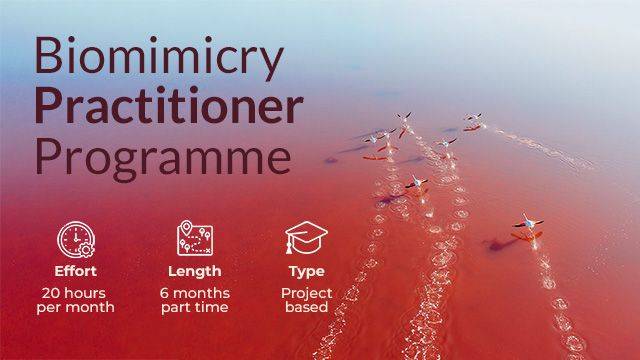
6-Month Programme
Upskill your career
Accelerate your career with the Biomimicry Practitioner Programme — and a real project of your own.
See the programme →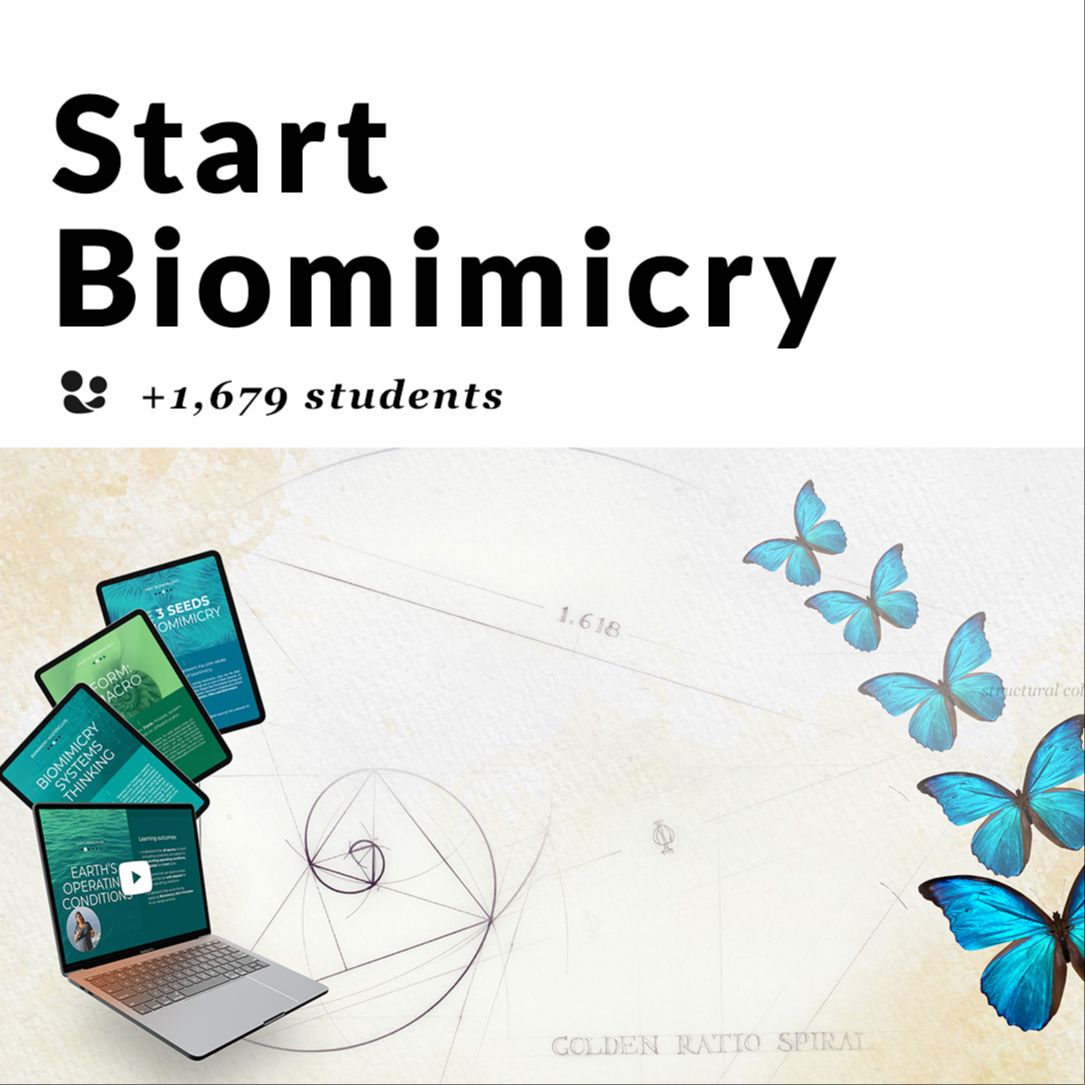
Here’s the one biomimicry course you need that turns these examples and insights into a skill set. Trusted by 1,679+ Learners. Three self-paced courses, one price. $198 US.
10 years to build, 10 minutes to read. This eBook is the essence of biomimicry.
Recent Posts