
How to Become a Sustainability Consultant

Okay. So you're considering becoming a Sustainability Consultant.
That's lovely to hear! Sustainability consultants help organizations and governments to develop and implement sustainable practices that reduce environmental impact, improve social responsibility, and ensure long-term economic viability along with promoting life-friendly processes.
This means your career is linked to impact, and creating a life-friendly future.
They also often work with biodiversity advisors, climate change consultants, or implement climate-wise regulations.
But how exactly do they accomplish that, and how does one become a sustainability consultant?
Below, we explore these questions, look into what jobs sustainability consultants do, and what the road to becoming one might look like.
What (Exactly) Does a Sustainability Consultant Do?
1. Assess an Organisation’s Sustainability Performance
Sustainability consultants conduct audits and assessments to determine a company’s environmental impact in metrics like carbon footprint, energy use, waste management, and more.
This is connected to how much a company's activities might contribute to climate change - an important assessment to make considering the decade between 2011 and 2020 was the warmest one on record, according to the United Nations.
They can then use this to identify inefficiencies and areas for improvement in business operations.
2. Develop Relevant Sustainability Strategies
Sustainability experts then also create sustainability action plans and roadmaps aligned with the organisation’s goals. They set measurable targets for business aspects like carbon reduction, energy efficiency, and water conservation, or whatever the relevant process might be.
These are measured and reported on regularly, while ongoing research keeps informing any changes or adjustments needed.
They might also consult in sustainable product design, and develop products like these 10 examples of biomimicry products for nature-inspired designers.
3. ESG & Sustainability Reporting
Sustainability experts also make sure companies comply with environmental, social, and governance (ESG) reporting requirements, depending on the country, region or context the organisation operates in.
They might prepare reports following frameworks like:
- Global Reporting Initiative (GRI)
- Task Force on Climate-related Financial Disclosures (TCFD)
- Carbon Disclosure Project (CDP)
- Science-Based Targets Initiative (SBTi)
4. Advising on Sustainable Design and Innovation
By doing this, sustainability consultants support businesses in designing eco-friendly products, packaging or services. This is often where biomimicry comes into play, as nature’s solutions are all sustainable (and regenerative!).
This could include the development of green buildings and infrastructure using certifications like LEED or BREEAM in the built environment.
This might also be the implementation of circular economy strategies (waste reduction, product life extension, etc.).
5. Engage Employees and Stakeholders ThroughTraining
These experts also work with employees, leadership teams, and external stakeholders to promote sustainability goals and educate others. This might include conducting workshops and training programs on sustainability best practices.
Who Hires Sustainability Consultants?
The big question you might be asking, then, is: which companies need sustainability experts like? This ranges greatly, and we could almost say (like we could of biomimicry professionals) that everybody in the working world needs them. Here are the most common types of organisations.
- Corporations (to improve sustainability performance and meet ESG requirements)
- Governments & NGOs (to develop environmental policies and programs)
- Real Estate & Construction (for green building projects and energy-efficient design)
- Product Manufacturers & Retailers (to implement circular economy models and sustainable supply chains)
- Financial Institutions (to assess ESG risks and sustainable investment strategies)
If you're more interested in the impact a sustainability consultant makes that the job itself, you can consider joining a startup or biomimicry / nature-inspired startup.
To see more about where these experts get hired, or perhaps find your dream job, view this listing of sustainability jobs available in 2025.
The Road to Becoming a Sustainability Consultant
So, if you are considering a career in sustainability, here's a breakdown of the typical process to becoming one (although this might look different to everyone, and vary in different countries).

A brief overview of what you might need to become a sustainability consultant. This infographic is free to use, provided the user credits and links back to Learn Biomimicry.
1. Education
A bachelor's degree in fields like environmental science, environmental engineering, biology, geography, or a related discipline often provides a solid foundation.
Advanced degrees, like a master's degree in environmental management, sustainability, or a specialized area can enhance your credibility and employability, and might allow you to stand out in a niche area of expertise.
2. Certifications and Further Professional Development
Certifications such as the Institute of Environmental Management and Assessment (IEMA); Leadership in Energy and Environmental Design (LEED) or Building Research Establishment Environmental Assessment Methodology (BREEAM) certifications can demonstrate your expertise and credibility in certain industries, but might not necessarily be required for other fields.
I'm going to be biased here, but I think that a great certification for any sustainability consultant is to become a Biomimicry Practitioner, and stand out from the crowd. This 6 month programme is purpose built for impact and it's where you'll be guided by biomimicry professionals to apply nature-inspired designs and methods to your career... after all - what's more sustainable than nature itself?
It’s important for sustainability consultants to continuously stay up to date with trends, developments and research in sustainability and environmental education.
3. Gaining Relevant Soft Skills & Experience
A sustainability expert needs a solid understanding of relevant environmental regulations, data analysis, environmental impact assessments, and sustainability reporting.
Soft skills like presentation and interpersonal skills are crucial for working with clients and stakeholders. Project management skills are essential for planning and executing sustainability initiatives.
Analytical and problem-solving skills are also needed to assess sustainability challenges and develop solutions.
You can read more tips on how to become a sustainability consultant in 8 steps here.
In Closing: What's next?
Sustainability consultants play a crucial role in creating a life-friendly future, and a discipline like biomimicry might be very useful to such professionals.
These skills will set you up for a career that not only assist others in meeting company goals and comply with industry standards to tick boxes, but one that actually creates lasting change.
Wild regards
Alistair
PS - Interested in standing out from the Sustainability Consultant crowd? Our Biomimicry Practitioner Programme empowers you with knowledge, skills and practical advice on how to apply biomimicry in your consulting... which is a skill 99% of others don't have. In this programme you'll walk away with a portfolio project that'll help you land your dream job.
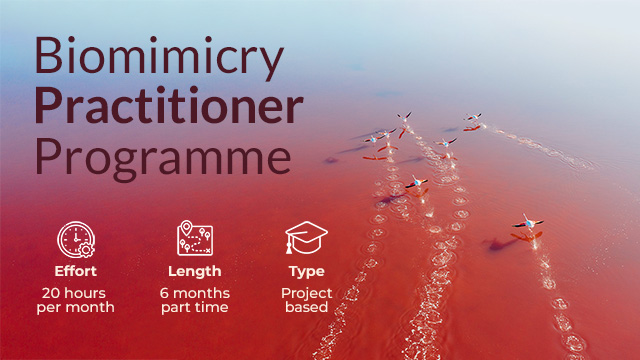
You can learn more about our 6-month Biomimicry Practitioner Programme here.
Sill curious?
You can read an overview of what Boston S Group could look like on BSG's blog: Climate change and sustainability.

10 years to build, 10 minutes to read. This eBook is the essence of biomimicry.
This Biomimicry Short Course Set is trusted by 1,679+ Learners. PLUS you get a free Confluence ticket
Recent Posts